
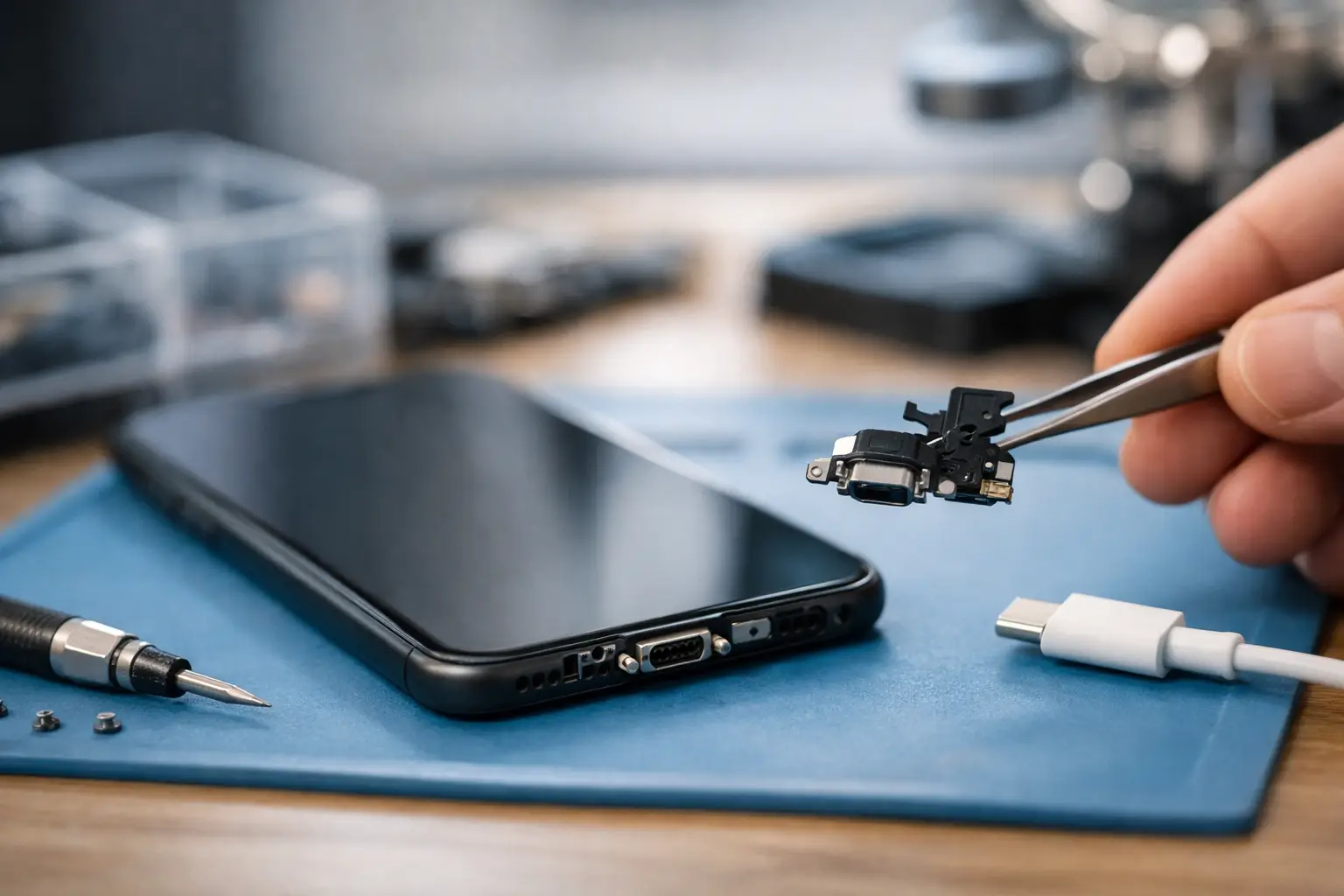
A cable that only charges when held at a certain angle is more than an annoyance. It can leave you without access to banking, work messages, navigation or family calls at the worst possible moment. Phone charging port repair cost is often lower than replacing a handset, but the right price depends on whether the port is dirty, worn, damaged or affected by a deeper fault.
A proper diagnosis matters before anyone quotes for a replacement. Many charging problems look alike from the outside. A phone may stop charging because of compacted pocket lint, a damaged cable, a tired battery, moisture damage or a fault on the main board. Paying for a new charging port when the real issue is elsewhere is not good value.
Phone charging port repair cost: typical price ranges
For many phones, a professional charging-port clean is the least expensive solution. If debris is packed into the connector, the repair may involve careful cleaning and testing rather than fitting a new part. This is usually quicker and more affordable than a full replacement.
When the port itself needs replacing, the cost commonly sits between €70 and €150 for many Android phones and older iPhone models. Premium devices, newer models and phones where the connector is soldered directly to the main board can cost more, sometimes reaching €150 to €250 or beyond. The exact figure depends on the model, the part required and how much disassembly is involved.
These are useful guide prices, not a substitute for an inspection. A technician should confirm the fault, check that the device charges correctly and make clear what is included before work begins. At Logiexpert Smartphone Repairs, initial diagnostics are free and the no-fix-no-pay approach means you should not be left paying for a repair that cannot be completed.
Why the price can vary so much
The charging connector is a small component, but reaching it is not always simple. On some phones, it is attached to a separate charging board or flexible cable. This can make replacement relatively straightforward. On others, it is fixed to the main board and requires specialist microsoldering work, which increases both labour time and risk.
The make and model also affect parts availability. Popular Apple, Samsung and Google models often have readily available replacement components. Less common models, or devices with limited parts supply, may require an ordered part and a different price. A high-quality component can cost more than a low-grade alternative, but it is usually the better choice for reliable charging and long-term use.
Water or liquid exposure changes the picture again. Corrosion can damage the port, nearby connectors and internal circuits at the same time. Replacing the port may restore charging, but only if the surrounding components are still healthy. In these cases, a technician needs to inspect the phone carefully before promising a result.
Is it the charging port or something else?
Before arranging a repair, try a known-good cable and wall adaptor that are suitable for your phone. Cables can fail internally even when they look fine, while worn or poor-quality adaptors may supply inconsistent power. If your phone charges normally with another cable, the port may not be the problem at all.
A loose connection, repeated charging interruptions or a connector that does not click firmly into place can point to dirt inside the port. Lint from pockets and bags becomes tightly compressed over time. It prevents the cable from reaching the contacts fully, making it seem as though the socket has worn out.
Battery condition can also cause confusion. If the phone recognises the charger but gains very little charge, shuts down unexpectedly or gets unusually warm, the battery or charging circuit may be at fault. A charging-port replacement will not solve a battery that has reached the end of its useful life.
Do not use a pin, paperclip or other metal object to dig into the port. It is easy to bend internal contacts or create a short circuit. Avoid forcing the cable as well. A careful professional clean is far cheaper than turning a blockage into a replacement job.
What a reliable repair quote should include
The cheapest advertised price is not automatically the best deal. A useful quote explains whether it covers diagnosis, labour, the replacement part and post-repair testing. It should also say whether the repair has a warranty and whether there are any additional costs if liquid damage or a board fault is discovered.
Ask whether the device will be tested with both charging and data transfer where relevant. USB-C and Lightning ports do more than supply power. They may be used for connecting to a computer, headphones or accessories. A port that charges but does not make a stable data connection may still need further attention.
For phones with a damaged back cover or heavily glued screen, safe access can take longer. That should be reflected openly in the quote. Good repair work is not just about changing a component. It is about reassembling the device securely, protecting internal parts and checking that the phone works properly afterwards.
Repair versus replacement: when does repair make sense?
A charging-port repair is usually worthwhile when the phone is otherwise in good condition, has enough storage and still receives the software support you need. Spending €90 to €150 on a phone you are happy with can be far more sensible than purchasing a replacement device.
The decision is less clear if the handset also has a weak battery, broken screen, unreliable cameras and no meaningful update support. In that situation, ask for a clear price for each repair and consider the total. Sometimes combining essential work is good value because the device is already being opened. Other times, putting the money towards a newer phone is the practical choice.
For business devices, downtime has a cost too. A field worker without access to calls, route planning, authentication apps or customer records can lose more than the repair price in a single day. Fast assessment, a clear quote and an on-site repair option can therefore be more valuable than simply choosing the lowest initial figure.
How to avoid another charging-port problem
Ports wear naturally, but a few habits can reduce avoidable damage. Pull the plug out by its connector rather than tugging the cable. Keep the phone away from loose debris in bags and pockets, especially if you work in dusty environments. Use a properly fitting cable instead of one that needs to be pushed, twisted or held in place.
If the phone has been dropped, exposed to rain or started showing a charging warning, stop treating it as a minor inconvenience. Continuing to charge a wet or visibly damaged port can make a small repair more complicated. Switch the device off if possible, avoid connecting power and arrange an inspection.
A charging problem does not automatically mean an expensive repair. Get the fault checked early, ask what the quoted work covers and choose a repair that uses quality parts and proper testing. That gives your phone the best chance of returning to dependable daily use without unnecessary cost.
Lascia un commento