
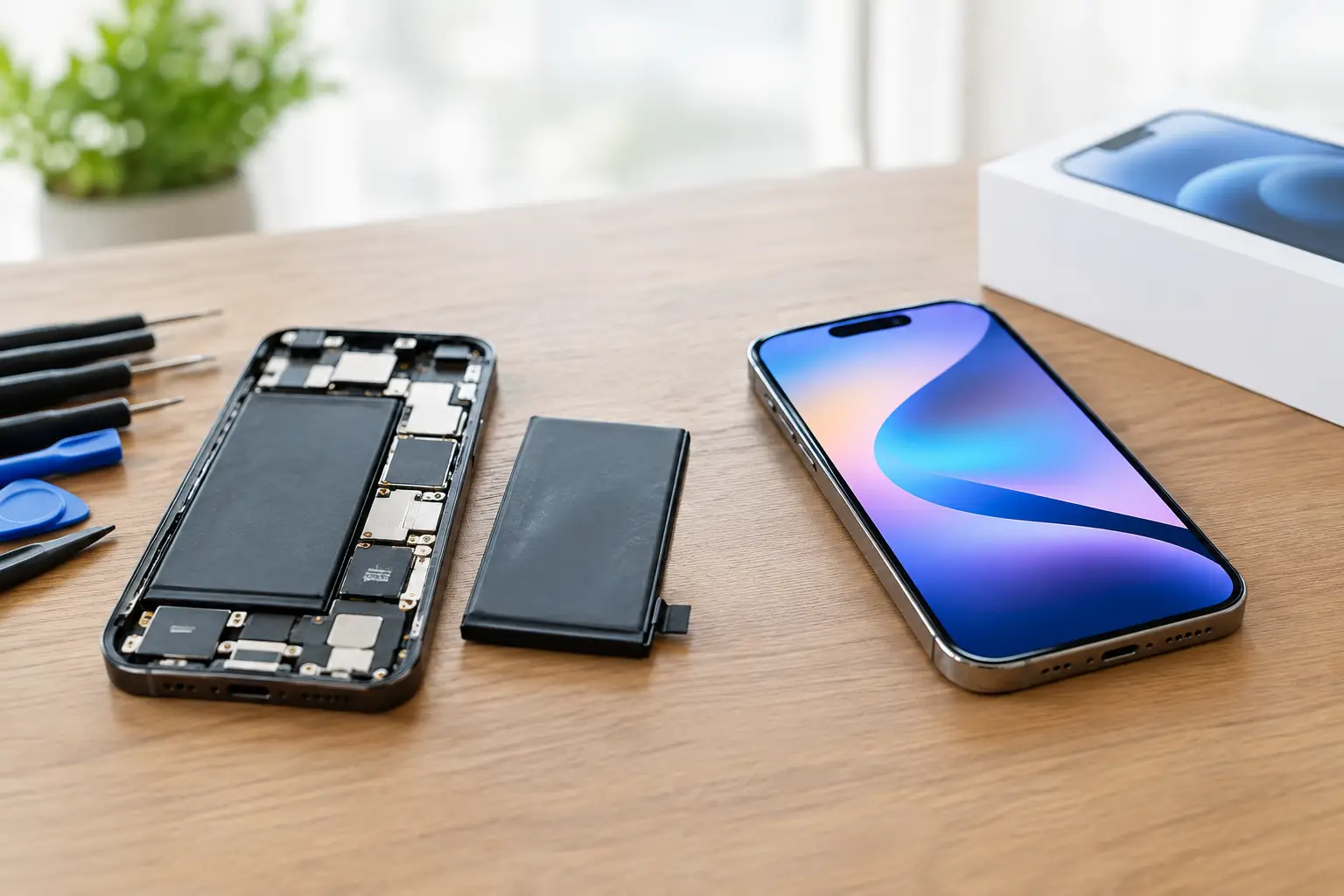
Your phone reaches 20 per cent by lunchtime, dims unexpectedly, or switches off while there is still charge showing. That is when the question of battery replacement versus new handset becomes more than a technical choice. It affects your budget, your data, your routine and, for many people, their ability to work, bank, travel and stay in touch.
A weak battery does not automatically mean your phone is finished. In many cases, a professional battery replacement gives an otherwise reliable device a useful second life at a fraction of the cost of buying new. But there are situations where putting money into an older handset is no longer the sensible option. The right answer depends on the condition of the whole device, not the battery alone.
When a battery replacement is the sensible choice
A battery replacement is usually worthwhile when your handset still does the jobs you need it to do. If the screen is clear, the cameras work, calls are reliable, charging is stable and the phone receives the software you require, battery health may be the only issue holding it back.
Lithium-ion batteries naturally lose capacity over time. After hundreds of charge cycles, they hold less energy than when the phone was new. This can lead to rapid battery drain, slow performance, overheating during normal use or sudden shutdowns in cold weather. These are frustrating problems, but they do not necessarily point to a fault with the processor, display or mainboard.
Replacing the battery can restore dependable day-to-day use. For a student who needs maps and lecture notes, a parent managing school messages, or a professional relying on authentication apps, a phone that lasts from morning to evening can make a real difference. It is also often the more affordable route when the rest of the device is in good condition.
A repair is particularly attractive if you are happy with your current handset’s camera, storage and speed. New phones bring new features, but those features have little value if your existing device already meets your needs. Extending its life also avoids the time spent transferring data, setting up banking apps and learning a new device.
Signs that the battery is the real problem
Battery faults can look like general phone problems, so it helps to look at the pattern. A handset that loses charge quickly but otherwise works normally is a strong candidate for battery replacement. The same is true if the battery percentage drops in large jumps, the phone needs charging several times a day, or it turns off under load despite showing remaining charge.
Physical changes need quicker attention. If the screen or back cover is lifting, the handset feels unusually hot, or you notice swelling, stop using the device and arrange an assessment as soon as possible. A swollen battery should not be ignored or pressed back into place. It can damage the screen and other internal components.
Charging problems are not always caused by the battery. Dust or damage in the charging port, a worn cable, software faults or a damaged charging circuit can produce similar symptoms. This is why free diagnostics are valuable: they identify the actual fault before you pay for work that may not solve it.
Battery replacement versus a new handset: when to upgrade
A new handset may be better value when battery performance is only one of several serious issues. For example, a phone with a failing battery, cracked display, damaged cameras and intermittent charging can become expensive to restore. Each repair may be possible, but the combined cost should be weighed against the age and remaining value of the device.
Software support is another deciding factor. If your handset can no longer run the apps, security updates or operating system version you need, a fresh battery will not fix that limitation. This matters especially for banking, work apps and devices that hold sensitive personal or company information.
Consider an upgrade if your phone has become too slow for ordinary tasks, has too little storage even after clearing unused files, or no longer gives you the connectivity and camera quality you genuinely need. A new device can also make sense after water damage or repeated faults, where reliability is difficult to guarantee.
For businesses, the calculation includes downtime. An employee’s phone may be essential for calls, scheduling, customer messages, navigation or two-factor sign-in. If an ageing device needs frequent repairs and disrupts work, replacement may be more cost-effective than another repair. On the other hand, if a fleet of otherwise capable phones simply has worn batteries, replacing those batteries can reduce costs and keep staff working with familiar equipment.
Compare the total cost, not just the upfront price
The price of a new phone is easy to see. The hidden costs are less obvious. Moving to a replacement handset can involve a case, screen protector, charger, cloud storage, accessories and time spent moving accounts. If data transfer is incomplete, you could lose photos, messages or access to essential apps.
With a battery repair, ask what is included. Quality replacement parts, professional fitting and warranty cover matter. A low price is not a saving if the battery performs poorly or the repair creates another issue. A trusted technician should explain the condition of the device, the likely repair outcome and whether replacement is genuinely the better option.
Age is relevant, but it is not a rule on its own. A three-year-old premium handset with a tired battery can still be an excellent phone. A cheaper model of the same age may struggle with software or storage sooner. The useful question is not, “How old is my phone?” but, “Will this repair give me reliable use for long enough to justify the cost?”
Do not forget data, security and convenience
Choosing a new handset often means a careful data transfer. Before replacing or resetting any device, make sure your contacts, photos, documents, authenticator codes and app logins are protected. Banking and work apps may require extra verification, so do not erase the old phone until the new one is fully set up.
A battery replacement normally lets you keep your device, your settings and your familiar apps exactly where they are. That convenience has real value, especially if you depend on your phone throughout the day. It also reduces electronic waste by keeping a serviceable handset in use instead of replacing it early.
Still, repair should never be treated as a reason to delay a necessary upgrade. If the phone is unsupported, unreliable or damaged beyond sensible repair, a new handset offers a cleaner long-term solution. The goal is dependable use, not keeping an old device alive at any cost.
Get a clear diagnosis before deciding
The quickest way to make a good decision is to have the handset assessed by an experienced technician. A proper diagnosis can separate a worn battery from a charging-port issue, software fault or more serious internal damage. It also gives you a realistic view of cost and expected results.
At Logiexpert Smartphone Repairs, customers in Maarssen can have their device checked before committing to a repair. With a no-fix-no-pay approach, high-quality parts and warranty-backed battery work, the focus is on restoring your phone where that remains the practical choice.
If your handset still suits your life but cannot hold its charge, a battery replacement may be all it needs. If several faults are building up or essential software support has ended, put that repair budget towards a phone you can rely on. A clear diagnosis turns a frustrating battery problem into a straightforward decision.
Lascia un commento