
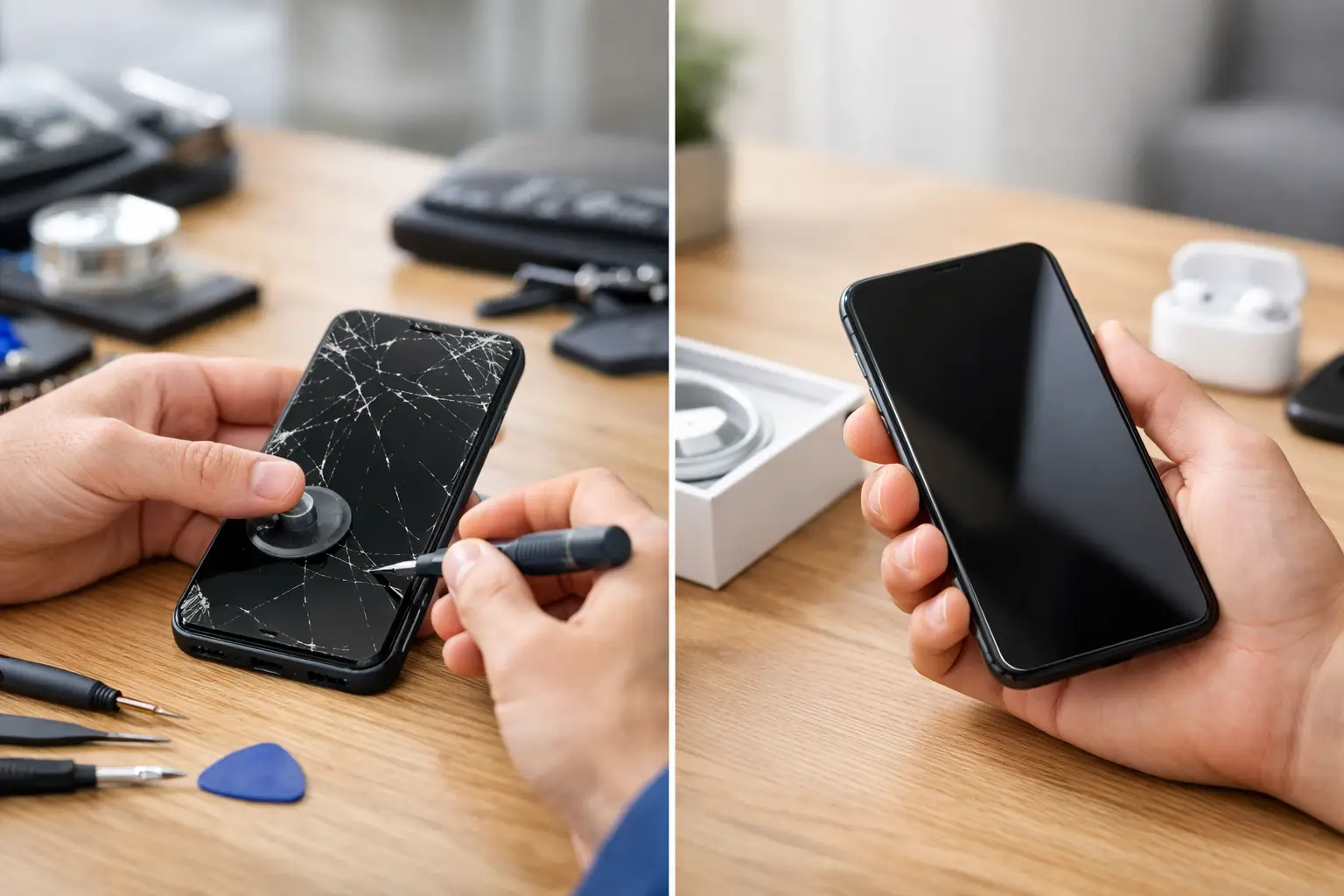
A cracked screen is annoying. A phone that will not charge, overheats during a call or dies before lunchtime can stop work, banking, travel plans and family messages altogether. Deciding whether to repair or replace a broken phone is not only about the visible damage. The best choice depends on what has failed, how old the device is and what a replacement would really cost you.
For many people, repair is the faster and more affordable answer. For others, particularly where a device is old, severely damaged or no longer receives essential software support, replacement makes better sense. A clear diagnosis before spending money takes the guesswork out of the decision.
Repair or replace a broken phone: start with the fault
Not every fault means your phone has reached the end of its life. Many common problems are repairable without replacing the whole device. A broken display, worn battery, faulty charging port, damaged back cover or software issue can make a good phone feel unusable, even when its main components are still working properly.
Screen damage is a good example. If the phone still switches on, responds to touch and works normally apart from cracks, lines or a dark display, a screen replacement can restore it for considerably less than buying a comparable new handset. The same is often true for a battery that drains quickly or a charging port that only works when the cable is held at a certain angle.
Water damage needs more caution. A device may appear fine after getting wet, then develop corrosion or charging problems later. Fast professional assessment gives the best chance of preventing further damage. Do not keep charging a wet phone in the hope that it will recover.
A free diagnosis is particularly useful when the cause is unclear. What looks like a battery fault could be a charging connector, software issue or internal component problem. Paying for the wrong repair is frustrating, so the fault should be identified first.
When repair is usually the sensible option
Repair generally makes sense when your phone is still suitable for your day-to-day needs. If it runs the apps you use, has enough storage, takes acceptable photos and receives security updates, one failed part should not automatically force a replacement.
Consider repair first in these situations:
- The screen, battery, back cover or charging port is the main issue.
- The phone is less than a few years old and performs well otherwise.
- Replacing it would mean taking on a costly contract or buying a lower-quality budget model.
- Your photos, messages, authenticator apps and work files are still stored on the device.
- You need the phone back quickly and cannot afford lengthy downtime.
A battery replacement can be especially worthwhile. Battery health falls gradually, so people often adapt to charging more frequently without realising how much it affects their routine. A new, warranty-backed battery can give a capable device a useful second life.
Repair also has a practical environmental benefit. Keeping a working device in use reduces electronic waste and avoids replacing a phone because of one component that can be renewed. That does not mean every repair is the right choice, but it is worth considering before discarding a phone that is otherwise reliable.
Check the repair cost against replacement value
The basic calculation is straightforward: compare the repair quote with the real cost of replacing your current phone with something of similar quality. Do not compare a repair only with the cheapest handset available. A low-cost replacement may have a weaker camera, less storage, slower performance or a shorter expected lifespan.
As a rule, a repair becomes less attractive when it costs a large share of the phone’s current replacement value and the device already has several other problems. For example, an older handset with a shattered screen, poor battery, weak charging port and limited software support may not be worth repairing piece by piece.
However, price is not the only factor. A quick repair can save time transferring data, setting up banking apps, recovering passwords, pairing accessories and learning a new device. For a business, replacing several staff phones can also create unnecessary disruption. A repair that gets essential devices back into use promptly may offer better value than the lowest upfront price suggests.
Age, updates and performance matter
A well-repaired phone is only a good investment if it can remain safe and useful. Before approving a repair, think about its age and software support. Devices that no longer receive security updates may become less suitable for banking, work accounts and sensitive personal information.
Performance is another clue. If your phone has always struggled with the apps you need, runs out of storage constantly or freezes despite having enough free space, repairing a cracked screen will not solve those wider limitations. In that case, replacement may be the more sensible long-term decision.
The answer can be different for each brand and model. Apple, Samsung, Google, Xiaomi, Huawei, Oppo, OnePlus and other manufacturers have varying parts availability and update periods. A technician can advise whether a quality replacement part is available and whether the repair is proportionate to the device’s condition.
Do not overlook your data
When a phone is broken, the urgent concern is often not the handset itself. It is the family photos, WhatsApp chats, contacts, notes, work documents and login details inside it. Replacing the phone does not automatically recover that information, especially if backups are incomplete or the old screen no longer works.
If the device still turns on, back it up as soon as possible. Use a trusted cloud backup or transfer data to another device where you can. If the screen is damaged but the phone is functioning, a repair may be the safest route to regaining access and completing a proper backup.
For devices that will not start, do not repeatedly force-charge them or attempt improvised repairs. This can worsen internal damage and reduce recovery options. A professional assessment can establish whether the phone can be repaired, reset or used to transfer data safely.
Signs replacement is the better decision
There are times when replacement is the responsible choice. Severe bending, repeated motherboard faults, extensive liquid damage or multiple costly failures can make repair uncertain or uneconomical. A phone that has already had several repairs may need a more careful cost assessment than a device with one isolated issue.
Replacement is also worth considering if the device cannot run current apps reliably, lacks storage for essential updates or has reached the end of its security support. This matters more for phones used for work, customer communication and payment or authentication tools.
Be realistic about the type of replacement you choose. A refurbished model from a trusted source can be a strong option when a brand-new flagship is unnecessary. It may provide a meaningful upgrade without the full cost of a new contract. Before handing over or recycling the old phone, ensure your data has been backed up and the device has been securely reset if possible.
Get a diagnosis before you decide
A repair decision should be based on facts, not assumptions. A cracked screen may be a straightforward repair. A phone that will not charge may need cleaning rather than a new port. A slow device may improve after a software update, storage clean-up or reset. The quickest answer is not always the cheapest answer, and the cheapest answer is not always the one that lasts.
At Logiexpert Smartphone Repairs, the starting point is a clear assessment of the fault, the likely repair cost and whether the result is worth it for your device. With no-fix-no-pay service, you do not pay if the issue cannot be resolved. That gives you space to make a practical decision without being pushed towards a repair that does not make sense.
If your phone is central to work or family life, act before a small problem becomes a complete failure. A timely diagnosis can protect your data, reduce downtime and show whether a quality repair can keep your device working for longer.
Lascia un commento