
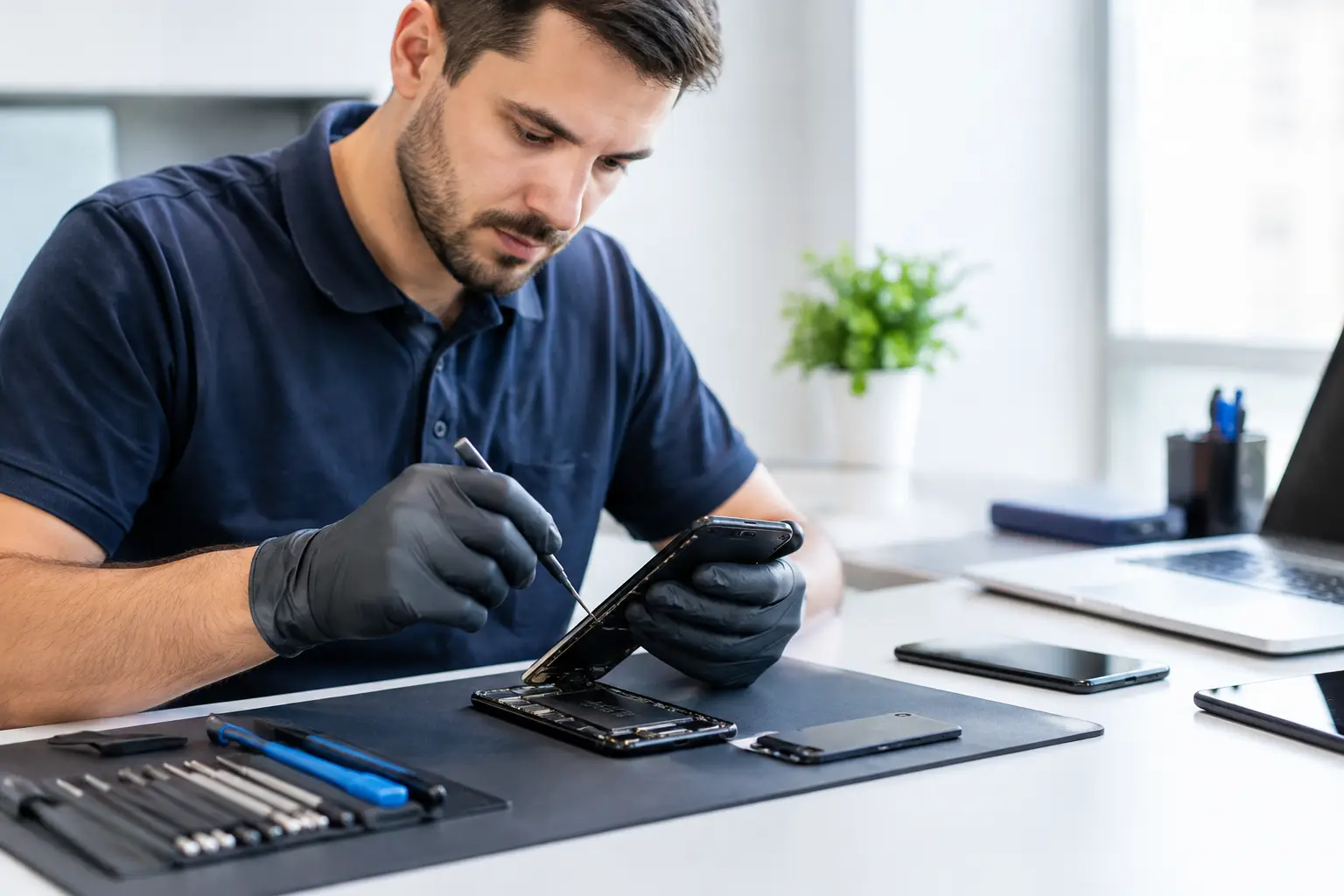
A cracked work phone is rarely just a cracked phone. It can mean a missed customer call, a driver without navigation, a sales colleague unable to access email, or a manager locked out of two-factor authentication. A dependable business mobile device repair service helps prevent a small hardware fault from becoming a costly interruption to the working day.
For companies in Maarssen and the surrounding area, the priority is not technical jargon. It is getting essential smartphones and tablets working again quickly, at a fair price and without uncertainty over the result. That calls for practical diagnostics, skilled technicians and a repair partner that understands how much daily work now depends on mobile devices.
Downtime costs more than a repair
Most businesses do not notice how many tasks rely on a phone or tablet until one stops working. Staff use devices for calls, messaging, planning, payments, photographs, stock checks, job sheets, delivery routes and access to cloud systems. Even a damaged screen can slow down a task that normally takes seconds.
Replacing every faulty device may seem like the quickest answer, but it is not always the most economical one. A new handset brings purchasing costs, setup time, account access, data transfer and the risk that the old device still contains business information. Where the device is otherwise in good condition, a targeted repair is often faster, less wasteful and considerably more affordable.
That said, repair is not automatically the right answer in every case. A very old device with several faults, poor battery health and no remaining software support may be better replaced. An honest diagnostic should make that clear before any work starts. The aim is to make the sensible business decision, not simply to carry out a repair.
What a business mobile device repair service should cover
A useful repair service needs to handle the faults that interrupt work most often, across the brands employees actually use. Businesses rarely have one perfectly standardised device fleet. It is common to see iPhones alongside Samsung, Google, Xiaomi, Huawei, Oppo, OnePlus or other Android devices.
Screen damage is the most visible issue. A broken display can create sharp edges, dead touch areas, poor visibility or a screen that stops responding altogether. A quality screen replacement restores safe, reliable use, which matters when staff need to enter information accurately or show content to customers.
Battery faults are equally disruptive, although they can be easier to overlook. A phone that loses charge before lunch leads to staff borrowing chargers, carrying power banks and worrying about being unreachable. A battery replacement can extend the useful life of a device, provided the replacement part is high quality and the work is covered by a clear warranty.
Charging-port repairs are another common requirement. Lint, dust, worn connectors and accidental damage can leave a device charging only at a particular angle or not at all. Professional cleaning may solve the issue in some cases. If the port is damaged, a repair may be needed to restore stable charging and data connection.
Back-cover replacements, camera-related damage, software updates, device cleaning, data transfers and secure resets can also be part of the service. These jobs may sound minor, but they help businesses keep devices safe, presentable and ready for the next user.
Start with a diagnosis, not an assumption
When a device will not charge, keeps restarting or has a black screen, the cause is not always obvious. A battery problem can look like a charging issue. A damaged display can make a working phone appear dead. Software faults may mimic hardware failure.
This is why free diagnostics are valuable for business customers. They provide a clear view of the fault, the likely repair and the expected cost before a decision is made. It reduces the chance of approving unnecessary work and makes internal approval simpler for office managers, operations teams and business owners.
A good repair partner should explain the options in plain language. You should know whether the repair is worthwhile, what part will be used, whether data is likely to be affected and how long the device may be unavailable. Clear answers are more useful than complicated technical detail.
Protect data before handing over a device
Business phones often hold more sensitive information than people realise. They may contain customer contacts, email accounts, business messaging, payment applications, photographs, saved passwords or access to internal platforms. A repair process should respect that responsibility.
Before a device is repaired, back it up where possible. Make sure the company knows the device passcode process and has access to the relevant Apple ID or Google account details if needed. If a data transfer or reset is required, agree in advance what must be retained and what should be removed.
Not every repair requires a reset, and a screen or battery replacement should not normally mean losing data. Still, backups are sensible because accidental loss, device failure and account lockouts can happen outside the repair itself. For company-owned devices, a straightforward record of who owns the handset, what number it uses and which accounts are connected can save a great deal of time.
Speed matters, but quality matters too
A fast repair is valuable only if it lasts. Low-cost parts may appear attractive, especially when several devices need attention, but poor-quality screens can have weak brightness, unreliable touch response or reduced durability. Inferior batteries may lose capacity quickly or create further performance problems.
The right balance is affordable rates with quality replacement parts and experienced fitting. This protects the device, reduces repeat faults and gives the business a more predictable cost. Warranty-backed battery work is particularly reassuring, because battery performance cannot be judged properly in the first few minutes after collection.
Turnaround time will depend on the device model, the fault and parts availability. A common repair may be completed quickly, while less common models or complicated damage can take longer. Businesses should be wary of promises that ignore these realities. A reliable technician gives a realistic timescale and keeps communication clear if anything changes.
On-site support can keep teams moving
For a company with multiple damaged devices, sending staff away individually to arrange repairs can create its own disruption. On-site repair support can be a practical option where suitable. It reduces travelling time, allows several devices to be assessed together and helps teams return to normal work sooner.
This is especially useful for organisations with customer-facing staff, mobile workers or shared tablets. A restaurant tablet, a tradesperson’s work phone and a reception device all have different roles, but each becomes urgent when it fails. Tailored support means the repair plan can reflect that urgency rather than treating every device as the same.
At Logiexpert Smartphone Repairs, business customers can arrange practical support for individual devices or wider repair needs, including on-site options where appropriate. The focus remains simple: assess the fault, explain the solution and get the device back into service with as little disruption as possible.
Build repair into your device routine
The most effective businesses do not wait for a queue of broken phones before deciding what to do. A basic device routine can limit disruption. Encourage staff to use protective cases and screen protectors, keep charging ports free from debris, install approved updates and report battery or charging problems before the device fails completely.
It also helps to decide who can approve repairs and what level of cost needs additional sign-off. For teams that rely heavily on mobile devices, keeping one prepared spare handset can be worthwhile. It gives a staff member a temporary working device while their own phone is being repaired, without forcing a rushed purchasing decision.
A no-fix-no-pay policy is valuable here. It means a business can have a fault properly assessed without paying for an unsuccessful outcome. Combined with free diagnostics, it makes it easier to act early rather than allowing a small problem to become a full device failure.
When a work phone or tablet starts showing signs of trouble, deal with it before the next call, job or customer request depends on it. The right repair support keeps people connected and gives your team one less problem to solve.
Lascia un commento